Energy Business, The Engine of Global Transition


Calli Seunghee Moon
Business Development Expert, Global Manufacturing Division, SK Inc. AX
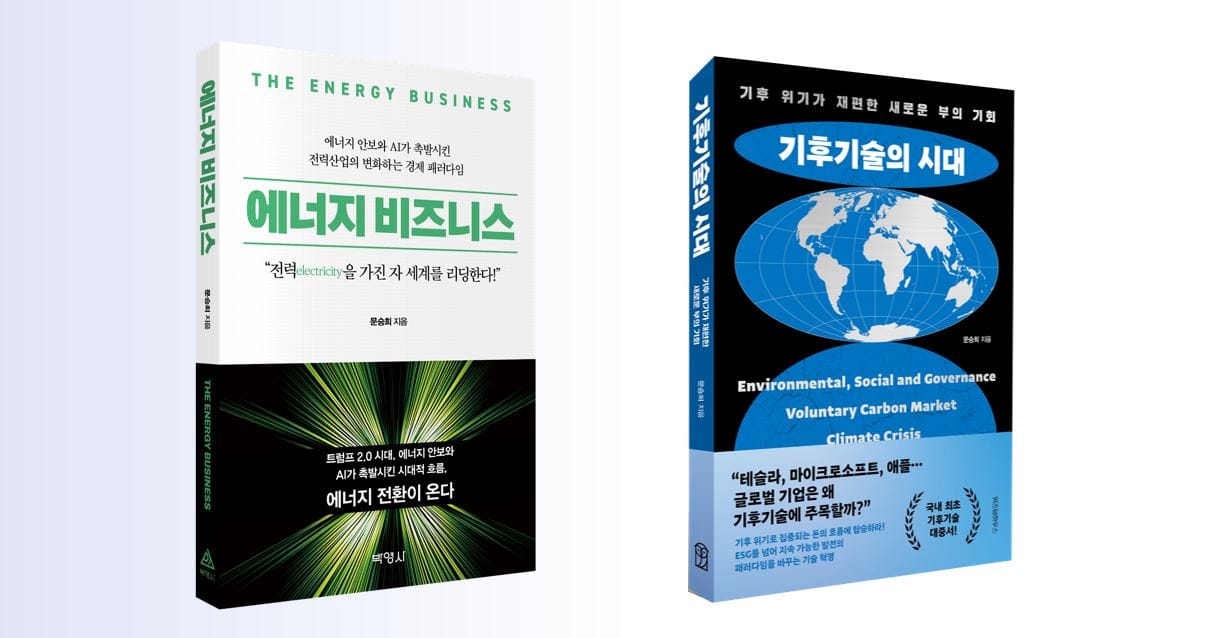
Author of Energy Business(2025) and The Age of Climate Technology(2023)
From AI and semiconductors to mobility and finance — behind every wave of innovation lies power and energy infrastructure. Author Calli Seunghee Moon calls it “the hidden engine of global industries,” emphasizing that the energy transition is not merely an environmental narrative but a structural reallocation of global capital and market power.
Her latest work, Energy Business, examines how this shift is reshaping industrial value chains and profit structures in practice.
Under the premise that “true competitiveness in the AI era lies in the ability to manage power,” this interview takes a deep look into the essence of global energy transition and competition.
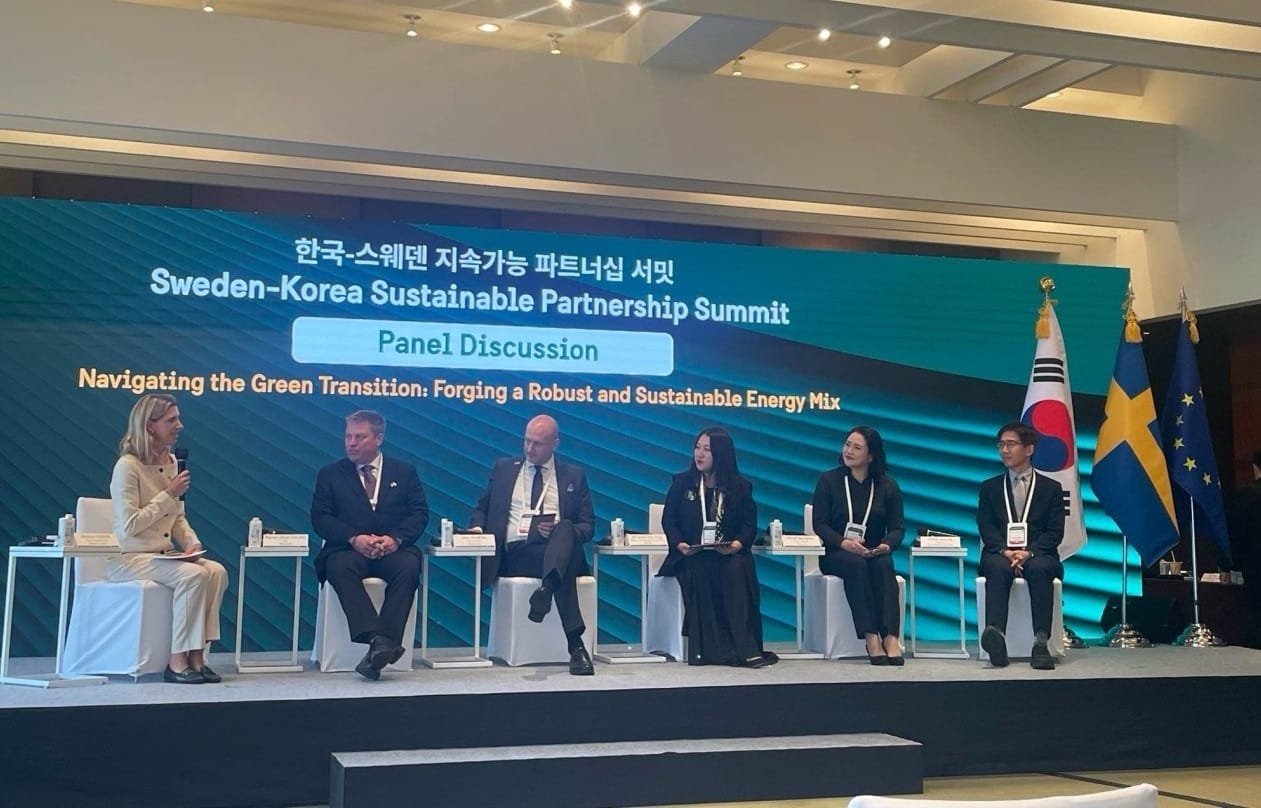
The Hidden Engine of the AI Era: The Power of Energy Infrastructure
Q1. Why should we view the energy transition not merely as an act of environmental good, but as a massive flow of capital?
The global energy industry is both the gateway of capital and the core infrastructure of the world economy. Enormous investments and technologies revolve around this sector. No industry—whether AI, semiconductors, or mobility—can function without an energy foundation.
Yet many people fail to grasp the true value and scale of energy. We have grown accustomed to relatively inexpensive electricity and have not experienced a “resource crisis” like the oil shocks of the past. However, it’s crucial to remember that global value creation and power dynamics have always revolved around energy.
Korea is no exception. Most of its major conglomerates have grown on energy-based foundations, and even now they continue to expand their portfolios by integrating energy transition, finance, renewable energy, and new business models. Beneath the surface lies a deeply rooted layer of technology and infrastructure.
That’s why I often emphasize in my lectures and writings:
“The world’s largest industry is the energy business.”
Because AI, manufacturing, and even finance ultimately operate on this very foundation.
Q2. Why are global tech giants investing so heavily in the energy transition?
Today, global IT leaders like Microsoft and Google are driving an AI-driven industrial transformation.
In this process, the most critical resource is power. AI data centers (AIDC: AI Data Centers) consume massive amounts of electricity, making energy acquisition and efficiency directly tied to corporate survival.
These companies are not investing in renewable energy simply to polish their environmental image—they see energy as the core infrastructure for business sustainability and are strategically securing it in advance. In other words, they are making a deliberate decision:
“If this is the road we must take, we will shoulder the burden first and move ahead.”
This is far beyond an image campaign. By leading an inevitable industrial transition, they are simultaneously shaping the future of business and reinforcing their leadership identity.
Ultimately, investment in energy transition is both the growth engine of the AI era and a strategic investment in long-term resilience, enabling their businesses to operate more robustly and sustainably.
Q3. How are traditional fossil fuel companies responding to this global shift?
A good example is ExxonMobil, one of the world’s leading fossil fuel giants. Once known solely for oil and gas, the company is now investing heavily in advanced technologies such as CCUS (Carbon Capture, Utilization, and Storage) and DAC (Direct Air Capture). These technologies essentially capture or offset carbon emissions, serving as tools to gradually transition their legacy business models.
Companies are not abandoning their existing cash flows from activities like oil production but are strategically integrating carbon offsetting and renewable technologies. While this presents the inherent risk of cannibalizing their own core business, they are proactively embracing these technologies as a necessary 'transition bridge' to a new operating model.
Ultimately, their goal is not short-term profit, but a structural transition necessary for long-term survival. Nearly all major global energy companies are now simultaneously pursuing renewable energy ventures. This is no longer a matter of "some companies actively pursuing it"; rather, it is an era where all major players are participating in the transition at once.
The Age of Energy Hegemony: China Builds Control, Canada Builds Trust
Q4. You mentioned that China currently leads the renewable energy sector. What strategy lies behind that dominance?
China once concluded that it had lost its global leadership position in semiconductors and advanced manufacturing. As a result, it set its sights on securing the next industrial paradigm’s leadership through the energy transition. The country calls this movement “Energy Rise (能源崛起)”—a national strategy to restructure the entire industrial value chain around its own ecosystem.
China has already secured the production technologies, facilities, workforce, and resources necessary for nearly every major renewable energy sector, including wind, and solar power.
Because of this, its “Carbon Neutrality by 2060” pledge is not just a political slogan—it’s a vision for energy independence.
In essence, China is striving to become a self-sufficient energy nation, capable of producing and supplying its own energy without being vulnerable to external risks such as oil shocks or pipeline disruptions.
This reflects a strong determination to control its own energy future and reduce dependence on foreign resources.
Q5. How does China’s dominance in technology, supply chains, and value chains create investment opportunities in the energy market?
China is far more than just a producer of solar panels. It is one of the few countries that possesses the entire value chain — from materials → components → equipment → finished products → construction and operation.
If even a single component supplier in China were to halt production, global offshore wind projects could come to a standstill. That’s how extensive China’s control is over technology, skilled labor, and supply networks.
As a result, China holds not only the largest market share but also unmatched cost competitiveness and production speed. It’s no exaggeration to say that the world now depends on China not only for semiconductors but also for energy.
Therefore, China’s so-called “Energy Rise” is not merely a story of industrial growth—it is a national strategy that fuses technological sovereignty, economic power, and industrial hegemony into a single long-term project.
Q6. What are the defining characteristics of Canada’s energy business?
Canada is a resource-rich nation that has achieved both energy security and self-sufficiency. Despite its relatively small population, its vast landmass and abundant natural resources give it a strong position in global diplomacy and trade.
For example, even amid trade disputes or tariff tensions with the United States, Canada can sit at the negotiation table with confidence—largely because of its independent and stable energy base.
As a major energy exporter with a reliable supply chain, Canada holds global competitiveness in oil, natural gas (LNG), and electricity. In many ways, its natural resource wealth underpins not only its economy but also its geopolitical strength.
Q7. In which direction is Canada’s energy industry evolving?
In the past, Canada’s energy sector was largely centered on traditional resource extraction, but it is now rapidly shifting toward high-tech energy innovation. For instance, the country is integrating LNG and renewable energy technologies, while expanding global collaboration projects focused on carbon reduction and low-carbon infrastructure.
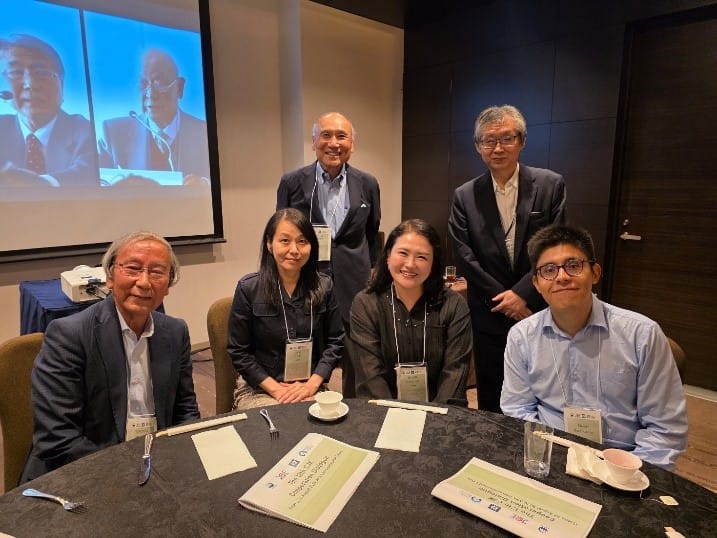
My key takeaway from the forum on Canada's Energy Security and cooperation was the profound way they position energy—it is viewed not just as an economic sector, but as integral to their national identity.
Canada approaches this transformation in a systematic and organized way, and notably, it regards partnerships with technology-driven nations like Korea as equal and mutually beneficial collaborations.
Ultimately, Canada is a country that conducts diplomacy through energy and builds trust through technology.

Mobile Power Hub : How EVs Are Opening a New Electricity Market
Q8. Why are global automakers entering the power market?
As the auto industry shifts to EVs, the battery itself has become a “mobile energy asset.” EVs consume electricity while in motion, but when parked they can function as ESS (Energy Storage Systems) to store—and even sell—power.
If electricity trading were liberalized, allowing easy buying and selling of power, automakers could build a “power monetization” business on top of their batteries. In effect, vehicles become mobile energy platforms capable of selling, buying, storing, and using electricity.
As in-car infotainment, charging, and lifestyle services expand, this power-based value chain grows, increasing dwell time, utilization, and brand loyalty around the vehicle itself.
In short, the convergence of power and mobility is transforming cars from mere transportation into central hubs of the energy ecosystem.
In the Age of Bridge Energy, How Korea Takes a Different Path
Q9. What stage of the energy transition is Korea currently in?
South Korea is currently concentrating on bridge energies, such as LNG (Liquefied Natural Gas), a strategic choice to balance carbon neutrality with economic viability before transitioning fully to renewables. Furthermore, the nation is heavily investing and researching new energy fields, including hydrogen and fuel cells.
Korea's core strength lies not merely in its possession of technology, but in its Technology Integration capability. Companies like Samsung Electronics, SK, and LG Electronics excel at weaving together expertise in power, semiconductors, materials, and manufacturing into cohesive systems.
As a result, even in high-complexity fields such as Nuclear Fusion and SMRs (Small Modular Reactors), this integrative capability can become Korea’s unique competitive asset. In other words, Korea is well positioned to evolve from a collection of discrete technologies into a maker nation that integrates systems, design, and operations end to end.
10. Which technologies and perspectives should Korea focus on for future energy innovation?
I am closely observing SMR (Small Modular Reactor) and Nuclear Fusion technologies. These fields transcend simple power generation; they are critical domains tied to energy security, export potential, and technological leadership.
South Korea already possesses the necessary design, construction, and operational expertise. The Korean SMR prototype garnered significant attention at the World Climate Industry EXPO in Busan last August. Its modular structure demonstrated competitiveness in areas like shortened assembly/installation time and enhanced safety.
Naturally, many scientists remain skeptical about this sector. While the voices saying, "It's still distant and commercialization is difficult," are prominent, China has already launched the world's first SMR commercialization project, targeting commercial operation by the end of next year, with the U.S. expected to follow suit soon.
So rather than asking why it can’t be done, this is the moment to research and test how to make it work. In the era of energy transition, leadership accrues to nations that are willing to experiment. Building credibility through demonstration projects, rather than leaning on technological pessimism, is how Korea can once again seize leadership in the global energy market.
Key takeaways from this interview are as follows.
First, the energy transition is not an environmental issue but the central axis of capital flows and industrial reordering.
Second, in both global tech and traditional energy, those who secure power and infrastructure first will hold market leadership.
Third, Korea’s strength lies not in isolated technologies but in systems thinking that integrates complex energy–industry structures.
With AI, data, power, and capital intertwined, true competitiveness today lies not in “designing innovation,” but in managing the energy that powers it. This is the essence of the energy business—the engine of capital and infrastructure that drives the transition.